
Products
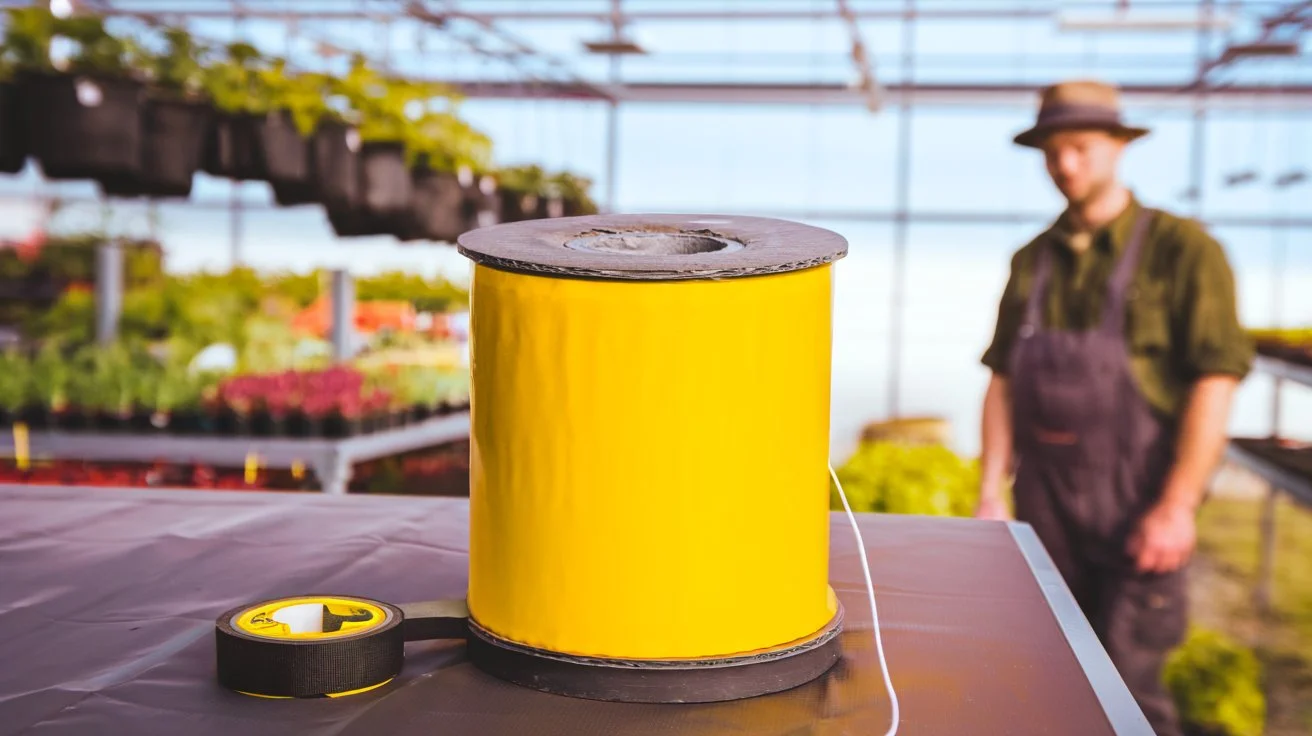
Catchy tape
A modern pest control system using innovative glue. Effectively traps flying insects such as whiteflies, aphids and thrips. Easy to use and durable, it reduces the need for chemical treatments. It supports growers in monitoring and managing pest populations in greenhouses and tunnels.
Sticky traps are a proven tool in pest control, used for years in agriculture and greenhouse cultivation.
Their purpose is both to quickly detect the presence of pests and to monitor the rate of their population growth. The key pests that can be effectively captured using these traps are flying forms of whitefly, various species of aphids, leaf miners and thrips.
Modern systems based on sticky traps are becoming an integral part of modern crop protection methods, such as integrated pest management (IPM). In some cases, chemical additives such as pheromones are also used to enhance the effectiveness of the traps. This makes it possible to reduce pest populations through mass trapping.
The colours of the traps also play a key role – yellow surfaces attract whiteflies and aphids, while blue ones are particularly effective in controlling thrips. Our adhesive tapes combine advanced technology with ease of use, offering a durable and effective solution for monitoring and reducing pest populations in greenhouse crops, polytunnels and under netting.
It contains an exceptionally soft, modified acrylic adhesive that remains highly effective for a long time in greenhouse conditions. The colour-optimised film attracts insects, and the unique adhesive effectively traps them.
Continuous monitoring: Enables growers to better understand the pest development cycle, allowing for more precise and effective crop protection planning.
Easy to use and durable: They guarantee effectiveness throughout the entire plant growth period, supporting optimal crop management in greenhouses, tunnels or under netting.
Reduction of pest populations: It significantly reduces the need for insecticides, which translates into lower crop protection costs.